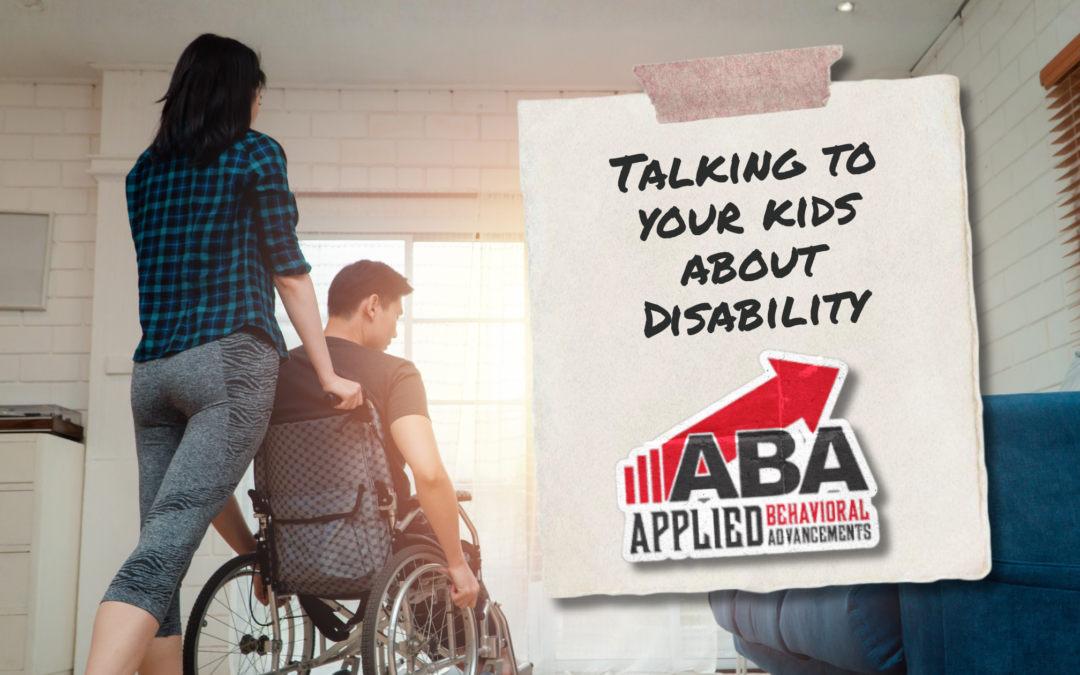
Kids are naturally curious, and they pick up on more than we realize. While it may initially be uncomfortable when kids start asking questions about people with disabilities, it is a completely normal part of their development. The way you respond can help shape a more empathetic world.
Having an open and honest dialogue with your children about what disabilities are and how they affect people can encourage an open and accepting mindset. Avoiding the subject of disability can inadvertently teach kids that disability is something taboo—but there’s nothing taboo about the diverse ways humans exist. Differences are a normal part of life.
Speak Plainly and Honestly
Kids can be very observant and are taking in new information all the time. The first time they see someone using a wheelchair, cane, or other mobility aid, they may have questions about it. They may wonder why they don’t need glasses or hearing aids themselves. They may have a classmate who uses an AAC device and needs extra help. As long as it is coming from a place of genuine curiosity and not meanness, there is nothing wrong with asking questions.
The best way to answer? Honestly. Though you may be tempted to ignore the question by saying, “It’s rude to ask,” or “Mind your own business,” neither of these answers actually answers your child’s question. Instead, they reinforce harmful ideas that disability is something to be ashamed of. There is nothing wrong with saying, “That person has a disability. They do things differently.” Teach your kids early on that disability is a normal part of human diversity and that there are lots of ways people show up in the world.
It is important to present disability as something neutral. It is not something bad, nor is it something good. It is just a reality that some individuals face. Every individual is deserving of respect, kindness, and compassion.
Avoiding Outdated Language
The preferred terms for talking about disabilities and the people who have them are continuously evolving. Contemporary advice may be different from what you heard when you were growing up.
While well-intentioned, terms like “special needs” and “differently-abled” are largely considered patronizing. Why? Well, terms like these imply that disability in and of itself is something shameful. They also ignore and dismiss the reality of disability that someone lives with. Disabled people know they are disabled. It is not a fact that they need to be shielded from. In fact, for many, it is an important part of their identity.
Other outdated terms include mental retardation, handicapped, and cripple/invalid.
You should also never say that someone “suffers” from or is “afflicted” by their disability. Every individual’s experience varies, and while some people may have negative experiences with aspects of a disability, that isn’t the case for everyone.
How to Talk About Disabilities
So, how should you refer to people with disabilities? Every individual will have their own preference, but common advice is to use a combination of person-first and identity-first language.
Person-first language (e.g., “person with a disability”) places emphasis on the person rather than their disability. A disability or condition is only one part of who they are. Person-first language keeps people from being defined by only one part of who they are.
Identity-first language (e.g., “a disabled person”) is also preferred by many people in the disability community because disability is an intrinsic part of how they identify. While this may seem contradictory to what we know about person-first language, it’s important to note the difference between who gets to choose this language. There is a big difference between someone personally identifying as an autistic person vs. someone else labeling them as “an autistic.”
Ultimately, it is up to each individual to determine how they would like to be referred to. When speaking in general, try using both person-first and identity-first language. But if you know someone who has a disability, ask them if they have a preference between identity-first and person-first language.
Encourage Curiosity
You can encourage curiosity and kindness in kids by talking with them about human diversity and seeking out age-appropriate resources to learn more about disabilities. There are a number of books, TV show episodes, and even movies available that provide compassionate insight into what it’s like to live with a disability.
Encourage Kindness
Ultimately, the most important part of talking to your kids about disabilities is to teach them to be kind. Teach them to be kind to people who are different from them. Teach them to stand up for everyone and do their best to make everyone feel included. Teach them that no one is less than; some people are just unique. You do this best by modeling that same kindness yourself.
About ABA-LLC
ABA-LLC is one of the largest suppliers of Behavior Support in the state of Kentucky. Since 2007, the agency has created innovative strategies to improve the lives of unique individuals. ABA-LLC works with around 190 contractors, each dedicated to building an inclusive culture that celebrates individuals of all abilities. No matter who you are, you can reach your goals at ABA-LLC.
ABA-LLC is set apart from its competitors by its uniquely person-centered approach. The agency strives to provide services from a place of deep love for the population it serves. Their work exemplifies the belief that every individual has a right to live a fulfilling and independent life integrated within their communities. There is no objective to change a person, but rather to give them the tools they need to succeed. B.F. Skinner summarizes this vision in his quote: “I’m not trying to change people. All I want is to change the world in which they live.” Learn more about us at https://aba-llc.com/