Myth: AAC Devices are too expensive for most families
Fact: AAC Devices are often covered under Medicaid
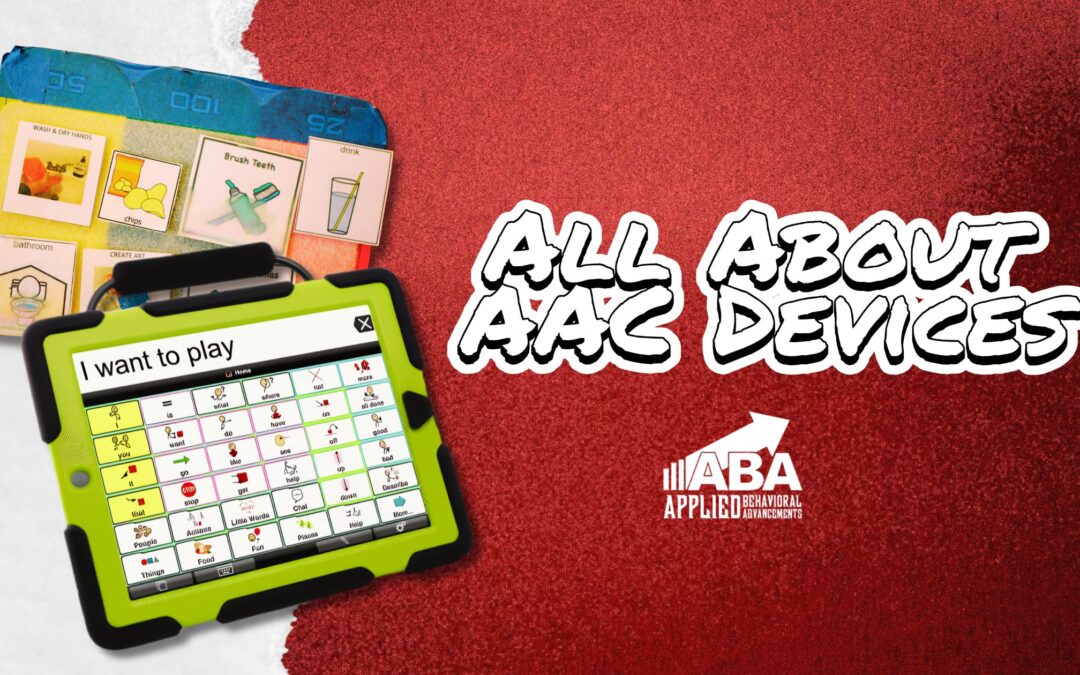
The digital age has completely changed the game for individuals who struggle with communication and speech production. AAC Devices give individuals tools to communicate, express themselves, and make choices about their lives. In this article, we’re teaching parents and clinicians All About AAC Devices.
What is an AAC Device
Augmentative and Alternative Communication (AAC) Devices are devices that assist communication for individuals who have speech or language impairments. While AAC devices began as low and medium tech items like picture boards, PECs cards, or even gestures, these days there is a large breadth of high-tech options available. AAC Devices can be specialized tablets that only serve to aid in speech, or an app available on smart devices.
“Augmentive” devices are for people who need something supplemental to support their communication, while “Alternative” devices can serve as an “alternative” form of speech.
AAC Devices are a valuable form of communication. For individuals who struggle with “traditional” forms of communication, AAC devices become their voice. They allow individuals to express feelings, thoughts, desires, and creativity that they might otherwise struggle to share. AAC devices are not a “lesser” form of communication; they’re simply a different way to interact with the world.
When considering AAC Devices, remember that just like any other language, there is a learning curve to teaching your loved one how to use the device. A Speech Language Pathologist can help guide your loved one through learning to integrate the device. Different devices will have different pros and cons. It may take trial and error to determine which device is the best fit for your loved one.
Popular Types of AAC Device
Low Tech
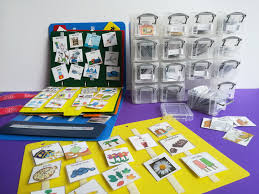
Low Tech AAC devices are any communication devices that are not electronic. Though these objects are rarely an individuals’ primary tool in the digital age, they serve as a critical backup thanks to their reliable and simple interface – no batteries required.
Examples of Low Tech AAC Devices include
- PECs Cards
- Communication Boards
- Alphabet Boards
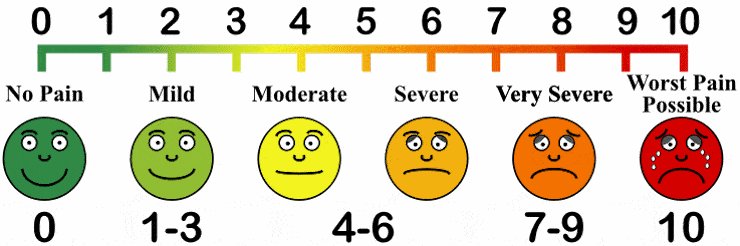
- Rating and Choice Boards
Low tech AAC devices can be a beneficial tool, however, they often serve a much more limited scope than more complex devices. Some require a facilitator to be used. As individuals grow and their ability to use AAC develops, it is important to prioritize devices that give them access to the widest vocabulary and the most independent use.
Medium Tech
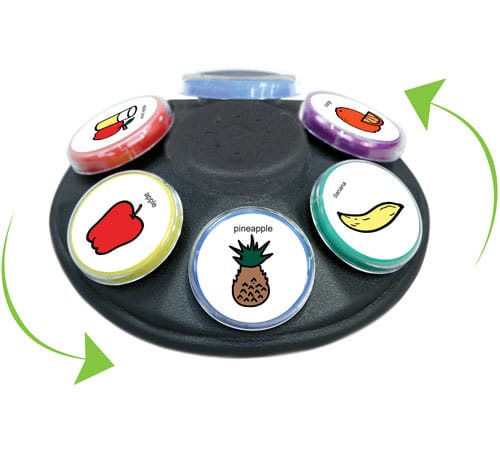
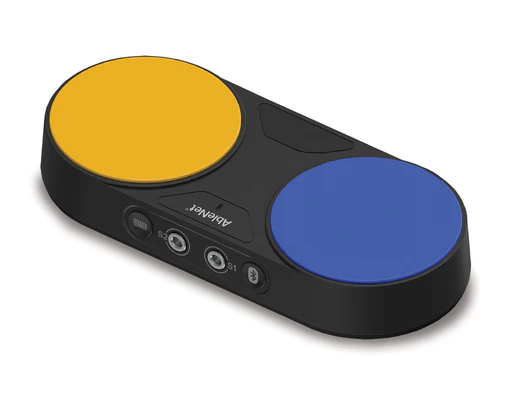
Bridging the gap between high-tech tablets and low tech flashcards are Medium Tech AAC Devices. Medium tech includes things like battery powered tools. These devices can be ideal for their simplicity and ease of use.
Examples of Medium Tech AAC Devices
- Single Message Communicators
- Multi Message and Static Display Devices
- Tangible and Switch Based Devices
High Tech
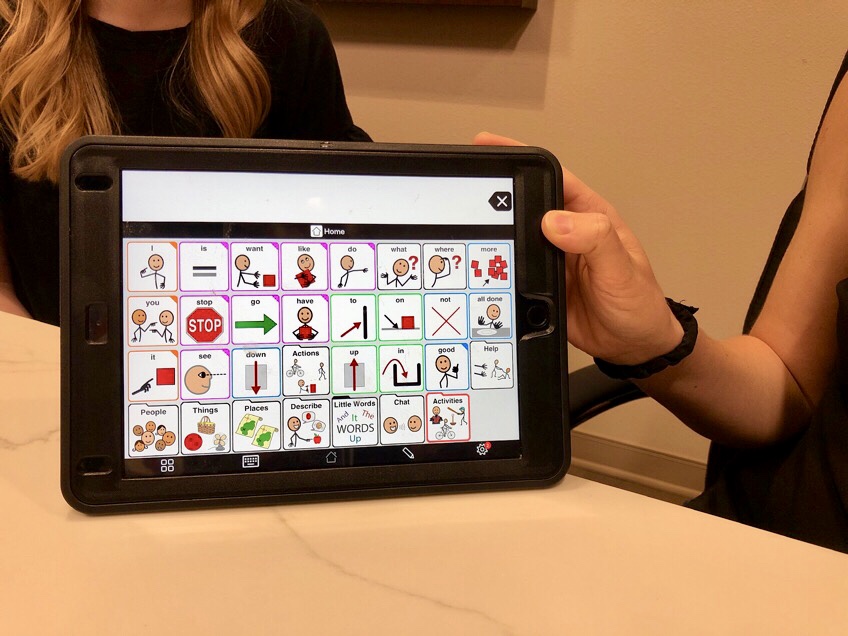
High Tech AAC Devices are uber flexible, uber customizable devices that use computer power to create speech. They come in all sorts of sizes and form factors. To set up an AAC device, you can choose a dedicated locked device or a tablet with apps. Most commonly, you see individuals using touchscreen tablets. However, some highly advanced AAC devices have eye tracking technology for users with complex neurological conditions or motor struggles.
There are many different manufacturers of different AAC tablets. An SLP will be able to advise on what device is the best fit for each learner.
Regardless of manufacturer, there are several common AAC softwares

Support for AAC Devices at ABA-LLC
ABA-LLC regularly partners with RMSpeech to help learners gain access to quality devices. RMSpeech has representatives, both virtual and travelling, who are here to support Kentucky families. RPMSpeech can assist in filing referrals, learning how to use AAC devices, and troubleshooting device errors.
You can learn more about RMSpeech on their website at https://www.rmspeech.com/
How to Get an AAC Device
To get an AAC device, you must first work with a Speech Language Pathologist. The Speech Language Pathologist will complete an evaluation of the learner’s speech and language skills and make the case for the benefits of an AAC device.
Anyone can submit a referral for an AAC device through a service like RMSpeech, but a SLP’s evaluation is necessary to complete the referral.
Medicaid covers the cost of AAC devices completely. Private Insurance coverage will vary case by case. If your insurance claim is denied or you are facing long wait times, you can create a DIY device by putting apps on an old tablet or set up a payment plan through a service like RMSpeech.
Integrating an AAC Device
It’s normal to have some friction when first introducing an AAC device to your learner. Learners need to be encouraged to use their new device. Parents, therapists, teachers, and clinicians should all encourage the integration of AAC devices in everyday life.
We see the most success with AAC devices when parents understand how the device works. They’re able to troubleshoot issues and keep the device up to date. Adults in the learner’s life should model the usage of the device by selecting certain words on the device while talking to the learner. It is more important to encourage children to develop core vocabulary skills than expecting them to develop specific, situational vocabulary immediately. Find opportunities to encourage your child to use the AAC device throughout the day.
Another common misconception about AAC devices is that an individual is using it “wrong.” According to expert Speech Language Pathologists, any use of AAC devices should be encouraged. This encourages freedom of expression.
Often, a child may become hyper-fixated on certain words or phrases stored in their device. But think about kids in a similar developmental phase learning to speak; repeating phrases or sounds is a normal developmental stage.
Kids learn how to communicate while they’re very young. The sooner you can integrate an AAC device into a child’s life, the better.
About ABA-LLC
ABA-LLC is one of the largest suppliers of Behavior Support in the State of Kentucky. Since 2007, the agency has created innovative strategies to improve the lives of unique individuals. ABA-LLC works with around 190 contractors, each dedicated to building an inclusive culture that celebrates individuals of all abilities. No matter who you are, you can reach your goals at ABA-LLC.
ABA-LLC is set apart from its competitors by its uniquely person-centered approach. The agency strives to provide services from a place of deep love for the population they serve. Their work exemplifies the belief that every individual has a right to live a fulfilling and independent life integrated within their communities. There is no objective to change a person, but rather to give them the tools they need to succeed. B.F. Skinner summarizes this vision in his quote: “I’m not trying to change people. All I want is to change the world in which they live.” Learn more about us at https://aba-llc.com/