

Have yourself…a sensory friendly holiday!
It’s the most wonderful time of the year; parties, decorations, family time, religious services, volunteering, gift giving, and warm meals. The Holiday season is a bustling time of year that breaks our routine and reminds us of the most important things in life. While all this excitement is the basis for wonderful memories, it’s no secret that the holidays can also be a huge stressor. For loved ones who experience Sensory-sensitivity, the constant stimulation of the holiday season can lead to increased anxiety and discomfort.
Sensory Sensitivity is a complex set of experiences often attributed to people on the neurodiversity spectrum, like those with Autism or ADHD. The truth is, lots of people have different sensory sensitivities, and they can make celebrating the holidays draining and frustrating.
By following this Sensory Friendly Holiday Guide, you’re setting your loved ones with sensitivity up for a successful, joyous holiday. Everyone in your family deserves to be included and considered this holiday season. Taking these steps are the perfect way to show your neurodiverse family members you care.
What is Sensory Sensitivity?
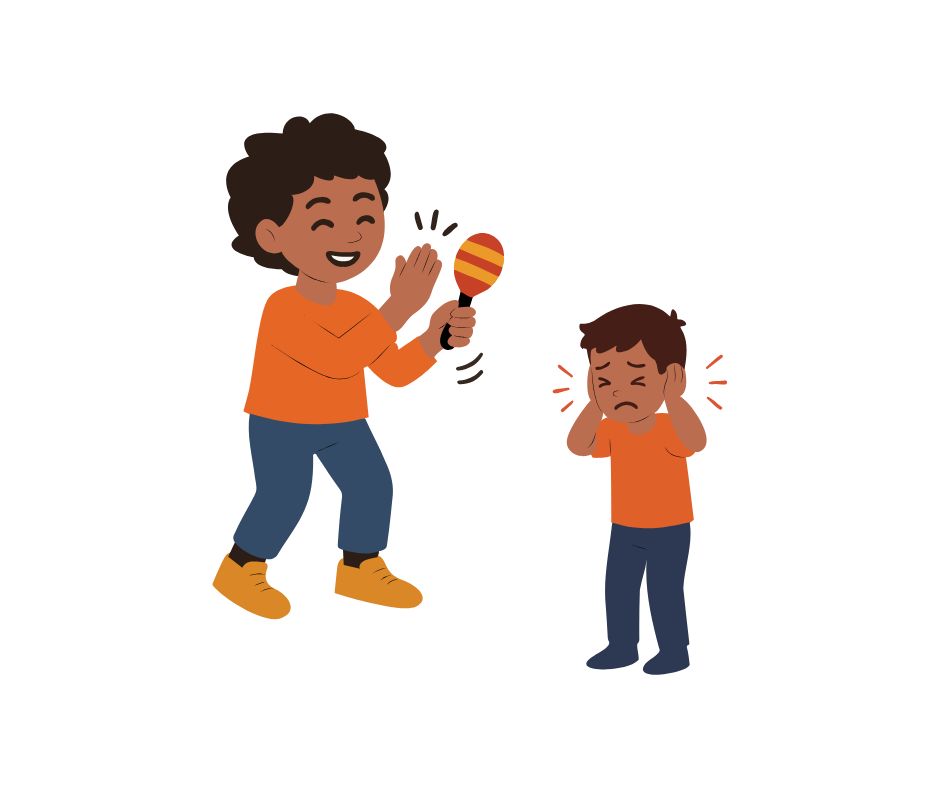
It may be hard for a neurotypical person to understand exactly what a person with sensory sensitivity. People living on the neurodiversity spectrum often experience the sensory world differently than neurotypical people. This can manifest through hypersensitivity, where sensory experiences are amplified (ambiance is too loud, smells are overbearing, food is too spicy). Some people experience hyposensitivity, where a person’s sensory experience may feel dulled (wearing a coat indoors, speaking too loud).
When a person with sensory issues takes in too much sensory input, they may experience what is called Sensory Overload. Sensory Overload happens when the brain literally cannot process everything that it is taking in. This may cause the individual to feel anxious, experience physical discomfort like headaches or behave irritably. If you notice your loved one seems to commonly have meltdowns in family holiday settings, it could be due to sensory overload.
While these labels are helpful for describing common experiences, it’s important to remember that first and foremost, neurodiverse people are individuals with preferences that are unique to their experiences. What makes an experience “sensory friendly” for your loved one is going to be unique to them. If you haven’t already, get curious about your loved one’s likes and dislikes. Notice where they struggle and where they thrive. Ask them about their preferences and take them into consideration.

Prepare and Practice
The holiday season breaks up our everyday routine, and asks us to be open to new routines or a lack thereof. One of the best things you can do to help your holiday go smoothly for people with sensory sensitivities is set clear expectations and communicate them. When people know what to expect, they are less likely to have an adverse reaction in the moment. This also opens the door for you to work together with your loved one to adequately prepare them for the holidays.
Take time to talk about your holiday plans with your loved one. Explain the different places you will go and people you might see. For some learners, it may be helpful to provide a visual aid, such as a visual schedule, Holiday social story or photos of relatives. These tools can help make the day feel more like routine.
As you talk through your Holiday plans with your loved one, have conversations about potential challenges. If your loved one is unable to communicate about these things on their own, take note of what holiday elements have been triggering for them in the past. Work together to adequately prepare for your plans. Do you need to set aside a quiet “safe” space? Pack a bag of comforting items? Plan to prepare a separate meal? Get creative and work together to create a strategy for when things get tough.
You can also encourage your loved one to practice certain behaviors leading up to your plans. Social stories are an easy way to review your holiday plans together, internalizing the rhythm of the day. You can also role-play different holiday scenarios, such as dining at the table, showing appreciation for gifts, or greeting family members. The goal is to make any unfamiliar or uncomfortable circumstances feel more natural. By participating in the preparation with your loved one, you show them that its normal to need support going into the holidays.

Communicating with Family
Whether you are visiting family in a new location or hosting in your own home, it’s important for family members to understand that your loved one has unique needs and preferences. Share information about how your family may do things differently, and set clear boundaries about what is and is not appropriate. Encourage everyone in your family to be patient and understanding.
If you are the parent of a loved one with sensory sensitivities, you may feel judgement from other family members about how your child behaves and how you parent. Know that you do not have to put up with unsolicited advice or pressure from outside sources. Just from the fact that you’re reading this article, we know that you’re a compassionate parent who takes their child’s health and safety seriously. Trust your own instincts and seek professional advice if unwanted feedback becomes overwhelming.

Create a Welcoming Environment
Do your best to create a comfortable and welcoming environment for your loved one. If you are going to a relatives for the holidays, communicate with them about your loved one’s needs and sensitivities.
Do what you can to adjust sensory elements in the holiday environment. Simple things like dimming the lights, turning down music, and minimizing strong odors can do a lot to prevent your loved one with sensory issues from experiencing sensory overload. If you don’t want to make adjustments to the entire environment, offer your loved one tools to help them manage sensory inputs. This could include things like noise-cancelling headphones or weighted blankets.
In general, most parents of people with sensory sensitivities report that it is easier for their loved one to enjoy the holidays in their own home. The familiarity and environmental control can help ease discomfort. If you do choose to travel for the holidays, plan to bring familiar and comforting items.
Wherever you celebrate, try to set aside a “safe space” for sensory regulation. This is a quiet space away from the holiday hubbub where your loved one can escape social interactions, uncomfortable smells, or overwhelming sound. Having a space set aside for your loved one gives them a plan for if they get overwhelmed, so they can avoid rash behavior. This also gives your loved one the option to break up their experience into smaller, more manageable chunks. Encourage your loved one to use this space if they begin to seem irritable.

Choose Inclusive Activities
Choose holiday activities that cater to your loved one’s interests and are mindful of their sensory sensitivities. Some people will really enjoy holiday baking, others will prefer to watch a movie. It’s important to give your loved one options as this will encourage their autonomy. Especially for those who struggle with “traditional” ideas of socialization, activities can be a great way to bond as a family.
Because each person has their own unique sensory processing system, its difficult for us to tell you exactly what activities will be a good fit for your loved one. Instead, get curious about what they like or do not like. Always assume competence, and make adjustments to activities as needed.
Here are some suggestions of activities that may be appropriate:
- Watching a Holiday Movie
- Baking Cookies
- Building a Gingerbead House
- Holiday Crafts
- Watching a Holiday Movie
- Playing in the Park
- Reading holiday stories
- Wrapping gifts
- Family Game Night

Know Professional Help is Available
For individuals who experience particularly severe sensory aversion that leads to challenging behavior, professional help is available. Using the data verified science of Applied behavior analysis (ABA), our clinicians use their knowledge of how behaviors are learned and how they can be changed to improve specific behaviors, establish new behaviors, and maintain positive behaviors. Our person-centered approach seeks to affirm the needs of each individual, and helps families learn how to create environments for success.

Affirm Neurodiversity
There can be a lot of expectations during the holidays that you may feel pressure to conform to, or to push your loved one to conform to. While including an individual in family traditions and encouraging them to spread their horizons is important, it’s also important that you meet your loved one where they are.
- Does a certain relative expect a hug from your touch-averse child? Allow your child to express bodily autonomy and say no. They can show affection in other ways.
- Does your family play loud games on Christmas? Spend time playing quietly with your child in their safe space.
- Lots of new foods at the table you can’t get your loved one to eat? Maybe your win is simply having everyone at the same table.
Celebrating a neurodiversity-affirming Christmas may look or feel a little bit different, and that’s okay. We are all born complete and perfect, with our own unique preferences. Considering and affirming your loved one’s unique interests and sensitivities helps them feel seen and accepted as they are. It gives you the chance to make new Holiday traditions together. After all, isn’t that what the holidays are all about?
About ABA-LLC
ABA-LLC is one of the largest suppliers of Behavior Support in the State of Kentucky. Since 2007, the agency has created innovative strategies to improve the lives of unique individuals. ABA-LLC works with around 190 contractors, each dedicated to building an inclusive culture that celebrates individuals of all abilities. No matter who you are, you can reach your goals at ABA-LLC.
ABA-LLC is set apart from its competitors by its uniquely person-centered approach. The agency strives to provide services from a place of deep love for the population they serve. Their work exemplifies the belief that every individual has a right to live a fulfilling and independent life integrated within their communities. There is no objective to change a person, but rather to give them the tools they need to succeed. B.F. Skinner summarizes this vision in his quote: “I’m not trying to change people. All I want is to change the world in which they live.” Learn more about us at https://aba-llc.com/